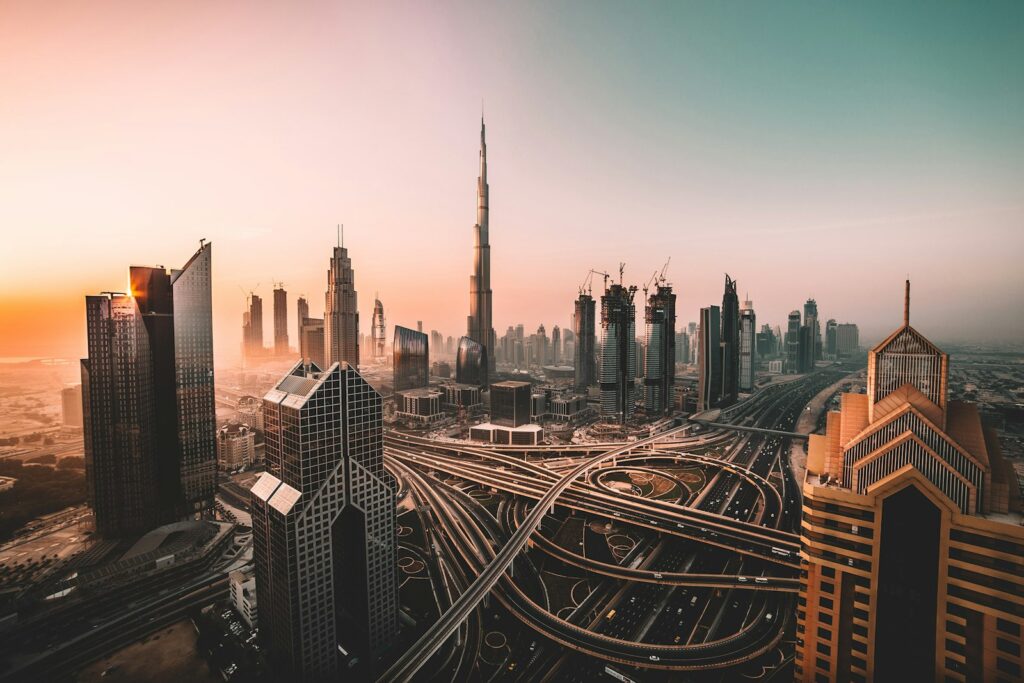
If you run a business in Dubai, you have probably felt the shift already. Search is no longer just “Google results and a blue link.” People still search that way, but they also ask ChatGPT-style tools for recommendations, scan AI summaries, use maps for “near me,” and talk to their phones like they are talking to a person. That is where understanding the difference between AEO, GEO and SEO starts to matter.
They are related, but they are not interchangeable. And if you treat them like the same thing, you usually end up with a strategy that looks busy on paper yet underperforms in revenue terms. We have seen this repeatedly while doing performance-driven SEO work in Dubai, where competition is high and customer intent is often very commercial.
Before we define them, here is the simple lens we use.
SEO helps you get discovered in traditional search results. AEO helps you get chosen as the answer. GEO helps you get surfaced in location-driven discovery, often right before a purchase decision.
Dubai businesses tend to need all three because the customer journey here is fast, multilingual, and convenience-oriented. People compare quickly, they value proximity, and they often decide based on trust signals they can verify in seconds.
What SEO Actually Means In 2026
SEO, or Search Engine Optimization, is the set of practices that improves your visibility in search engines like Google. In practice, that means creating and improving pages so they rank for relevant keywords, earn clicks, and convert visitors into leads or sales.
SEO is still foundational because it builds your “search asset.” A well-built page can bring qualified traffic for months or years with incremental upkeep. That is a financial logic many Dubai businesses appreciate: a good page behaves more like an asset than an expense.
But SEO today is not only about “ranking.” It is about matching intent. If someone searches “villa renovation contractor Dubai,” they are not looking for a definition. They are looking for a shortlist, proof, pricing ranges, timelines, and a way to contact someone credible.
So modern SEO is less about tricking an algorithm and more about reducing decision friction for a buyer who is already motivated. For those seeking to fully leverage these changes in search behavior and enhance their online presence in Dubai’s competitive market, it’s crucial to partner with experts who understand these nuances. This is where DigitsDNA, a leading digital marketing agency specializing in performance-driven SEO strategies tailored for the unique landscape of Dubai’s market can be of immense help.
What AEO Means And Why It’s Not Just “SEO With FAQs”
AEO is Answer Engine Optimization. The goal is to make your content easy for systems to extract, trust, and present as a direct answer.
Those systems include Google’s AI Overviews and featured snippets, as well as AI assistants and voice tools. The key difference is that AEO is not primarily optimizing for a click. It is optimizing for being quoted, summarized, or referenced as the answer.
This changes how you structure content.
AEO rewards clarity over cleverness. It prefers direct definitions, step-by-step explanations, clean headings, and concise supporting statements. If your page buries the answer under a long introduction, it may still rank, but it is less likely to be used as the “answer block.”
AEO also forces a higher standard of precision. When an answer engine pulls a sentence, that sentence must stand on its own without context. That is why strong AEO content tends to read like a helpful expert who anticipates confusion and resolves it before it starts.
What GEO Means (And What People Confuse It With)
GEO is commonly used in two ways in marketing right now, and the overlap creates confusion.
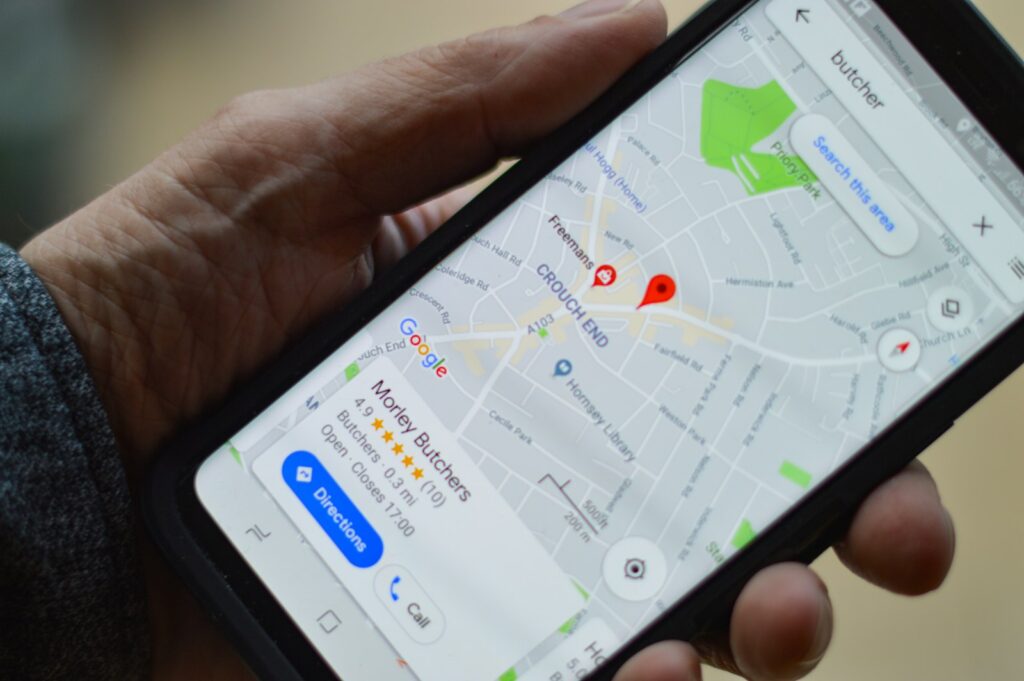
One meaning is Geographical Optimization, which is about improving visibility for location-based searches and map-driven discovery. Think Google Business Profile, local landing pages, “near me” searches, reviews, and proximity signals.
The newer meaning is Generative Engine Optimization, which overlaps with AEO but focuses more broadly on being included in AI-generated recommendations across tools, not just as a direct answer. In day-to-day implementation, these two often converge because the same disciplines help: authority, structured content, and verifiable proof.
In Dubai, both meanings matter, but geographical optimization is usually the fastest path to measurable leads for service businesses. The customer is often not searching “best.” They are searching “closest credible option that can do it this week.”
If you want a practical approach, treat GEO as two tracks.
First, Local GEO: maps and location intent. Second, AI GEO: generative recommendations.
You do not need to obsess over naming. You need to build a system that wins visibility wherever customers are actually making decisions.
The Core Differences In One Clean Mental Model
Here is the simplest comparison we use when planning campaigns.
SEO is about ranking pages.
AEO is about becoming the extracted answer.
GEO is about being surfaced when location or context matters, whether that is on maps or inside AI recommendations.
If you want a quick reference, this is one of the few places where a small bullet list improves readability:
- SEO: Targets keywords and landing pages to earn clicks and conversions.
- AEO: Targets questions and formats to earn “answer placement” and citations.
- GEO: Targets proximity, local trust signals, and contextual discovery to earn calls, directions, bookings, and shortlist inclusion.
That distinction is not academic. It changes what you publish, how you structure it, and how you measure success.
Why This Matters More In Dubai Than In Many Other Markets
Dubai is a high-competition environment with fast decision cycles. That combination makes “visibility without trust” a weak strategy.
If your brand appears, but the customer cannot quickly confirm you are legitimate, you lose to someone who has clearer proof. This proof might be reviews, case studies, recognizable clients, location certainty, response speed, or simply content that answers questions without dodging.
Dubai is also geographically compact but behaviorally segmented. A person searching from JLT, Business Bay, or Al Barsha may share the same intent, but they often prefer providers who can operate near them. For many service categories, the proximity expectation is real even if you can travel across the city.
Add multilingual and multicultural buyer expectations, and you get a market where clarity, trust, and contextual relevance matter as much as classic rankings.
That is why we rarely treat SEO as a standalone deliverable anymore. We treat it as the base layer that supports AEO and GEO.
How The Customer Journey Changes Across SEO, AEO, And GEO
A useful way to think about this is to map each one to a different moment in the buyer’s head.
SEO tends to perform best when the buyer is researching options and comparing.
AEO tends to perform best when the buyer wants a direct explanation or a confident recommendation.
GEO tends to perform best when the buyer is ready to act and location or convenience is part of the decision.
In Dubai, these moments often happen within the same day. Someone might research at lunch, ask chatgpt in the evening, then search “near me” at night to book for tomorrow.
If you only invest in one layer, you are present for one moment and absent for the other two.
What Changes In Content When You Optimize For AEO

AEO content is not “longer SEO content.” It is usually cleaner.
We approach AEO writing with a few principles.
First, we lead with the answer. If the page is “How Much Does SEO Cost In Dubai,” we state the cost ranges and the variables early, then explain them.
Second, we define terms in plain English. If a reader needs to open another tab to understand your language, an answer engine will also struggle to extract a clean response.
Third, we separate concepts into tight sections. One concept per paragraph is not only good writing, it is also good extraction.
Fourth, we support claims with verifiable signals. That can be examples, process descriptions, screenshots, policies, or real constraints. This is how you avoid sounding like generic marketing copy, which answer engines increasingly ignore.
Finally, we make the next question easy. The best AEO pages feel like a conversation with a patient expert. They answer the follow-up before the reader asks it.
What Changes In Execution When You Optimize For Local GEO
Local GEO is less glamorous, but it often produces the fastest ROI for Dubai service businesses.
It starts with your Google Business Profile. Not just claiming it, but treating it like a live sales page. Categories, services, service areas, photos, Q&A, posts, and review responses all affect conversion and discovery.
Then come local landing pages. These are not thin “Dubai + service” pages. They are pages that reflect real operational coverage, real proof, and real objections. A strong local page reduces uncertainty around travel time, parking, pricing norms, and what happens after the first call.
Reviews are the quiet engine here. Not because of the number alone, but because of the substance. A review that mentions the exact service and area acts like a miniature case study for both humans and algorithms.
What Changes In Strategy When You Optimize For SEO (The Base Layer)
Classic SEO remains the infrastructure.
You still need solid technical foundations so pages can be crawled, indexed, and served quickly. In Dubai, where mobile-first behavior is common, speed and usability have direct revenue impact. If the page loads slowly, you do not just lose rankings. You lose leads.
You also need clean site architecture. This is not only for bots, but for humans. A person comparing providers should be able to find pricing logic, service details, and proof with minimal clicks.
Then there is topical depth. For competitive categories in Dubai, a single page rarely wins on its own. You typically need clusters. The main service page, supporting guides, comparison pages, and industry-specific pages all reinforce each other.
SEO is the layer where you earn sustained discovery. AEO and GEO are often where you win the “moment of decision.”
How We Measure Success Without Getting Distracted By Vanity Metrics
Dubai businesses are often pragmatic. The question is not “Did traffic increase?” – a common vanity metric that many fall into the trap of focusing on. The real question is “Did qualified demand increase?”
So we separate measurement into three types of outcomes.
SEO outcomes are typically impressions, rankings for commercial intent terms, organic leads, and assisted conversions.
AEO outcomes are visibility in snippets and AI surfaces, brand mentions, referral patterns, and changes in lead quality. Sometimes AEO reduces clicks but increases trust, because the prospect arrives already informed.
GEO outcomes are calls, direction requests, bookings, WhatsApp clicks, and conversion rates from local pages.
The cause-and-effect logic matters. Rankings without conversion are a cost. Conversion without scalability is a ceiling. The goal is to build a system where each layer supports the other, so you can grow without constantly buying attention.
A Dubai Example: Three Businesses, Three Different “Search Problems”
Imagine three companies.
A boutique dental clinic in Jumeirah. AEO matters because patients ask very specific questions about procedures, pain, recovery, and pricing. GEO matters because proximity and trust are big drivers. SEO matters because people still compare “best dentist Dubai” and service-specific keywords.
A B2B logistics company in JAFZA. SEO matters because buyers research vendors and evaluate capability. AEO matters because decision-makers ask AI tools for shortlists and explanations. Local GEO matters less for walk-ins, but location context still affects credibility.
A home maintenance service covering Marina, JLT, and Downtown. GEO is the engine because calls are immediate and local. SEO supports breadth of services. AEO helps with trust-building content like “How to choose an AC duct cleaning company” that reduces hesitation.
Same city. Different search reality. That is why a one-size plan tends to underperform.
Common Mistakes Dubai Businesses Make When They Hear “AEO” And “GEO”
One mistake is treating AEO as adding a FAQ section to every page, without improving the page’s core clarity. FAQs can help, but only if the main content is already structured and precise.
Another mistake is over-localizing content with awkward keyword stuffing. If your page reads like it was written for an algorithm, it will not convert a Dubai customer who has many alternatives.
A third mistake is ignoring proof. In competitive Dubai categories, proof is not optional. It is part of the content. Case studies, before-and-after photos, process explanations, and transparent constraints do more than “sound credible.” They reduce refund risk and complaint risk because expectations are clearer upfront.
A fourth mistake is measuring only rankings. Rankings matter, but they are a means, not the outcome. If your leads are low quality, your ROI will look poor even with great visibility.
A Simple Framework Dubai Teams Can Use To Align SEO, AEO, And GEO
We like frameworks because they keep execution grounded.
Start with Demand, then move to Answers, then finish with Action.
Demand is SEO. You identify the commercial queries and build pages that satisfy intent.
Answers is AEO. You identify the questions prospects ask before they commit and you answer them in extractable, trustworthy formats.
Action is GEO. You remove friction in the last mile: local visibility, reviews, map presence, and conversion pathways.
This sequence is practical because it matches how revenue behaves. Demand creates volume, Answers increases confidence, Action improves conversion rates. When conversion rates improve, the same traffic becomes more profitable. That is basic financial leverage.
Which One Should A Dubai Business Prioritize?
If you are starting from scratch, SEO and Local GEO usually come first because they create baseline discoverability and direct-response leads.
If you already rank but lead quality is inconsistent, AEO is often the missing piece. It improves pre-qualification. Prospects arrive understanding your process, your pricing logic, and whether you are a fit.
If you are strong on maps but weak on the website, you are likely leaving money on the table because you are not capturing broader intent queries. That is where SEO content clusters pay off.
If you are strong on content but weak on maps and reviews, you often lose the final click to a competitor with a better local trust profile. That is where GEO basics can produce a surprisingly quick lift.
The honest answer is that the priority depends on where the bottleneck is. We are biased toward performance, so we start by diagnosing the constraint, then allocate effort where it changes revenue outcomes.
FAQs
What Is The Main Difference Between SEO And AEO?
SEO helps your pages rank and earn clicks from search engines. AEO helps your content get extracted as direct answers in snippets and AI summaries, sometimes without a click.
Is GEO Only About Google Maps And Local SEO?
Not only. GEO often includes local visibility like maps and “near me” searches, but it can also mean being included in AI-generated recommendations where location and context influence suggestions.
Can A Dubai Business Ignore AEO And Still Grow With SEO?
Yes, especially in categories where buyers click and compare. But as AI summaries and voice answers expand, ignoring AEO can reduce brand visibility at the exact moment users ask “who should I choose?”
What Type Of Businesses Benefit Most From GEO In Dubai?
Service businesses with quick decision cycles benefit most, like clinics, maintenance, salons, restaurants, and local professional services. GEO improves calls, direction requests, and bookings from high-intent searches.
How Do We Know If Our Problem Is SEO, AEO, Or GEO?
Look for the bottleneck. If impressions are low, it is often SEO. If traffic comes but prospects are confused, it is often AEO. If website looks fine but calls are low, it is often GEO.
Does AEO Replace Blogging?
No. AEO changes how you blog. Posts should answer real questions clearly, include definitions and steps, and make key points easy to extract. It is still content marketing, just more structured and decision-focused.
How Long Does It Take To See Results From These Approaches?
Local GEO improvements can show impact faster if your Google Business Profile is under-optimized. SEO typically takes longer because rankings compound. AEO impact varies, but clarity improvements often raise conversion quality even early.
Do We Need Separate Pages For Every Dubai Area?
Not always. Only create location pages where you truly serve and can add unique proof or constraints. Thin duplicates usually do not perform well and can confuse users who want practical, local details.
A Calm Next Step From Us At Digits DNA
At Digits DNA, we have learned that most “search growth” problems in Dubai come down to one thing: the business is visible in one place but invisible in another part of the decision journey. That is why we prefer to map SEO, AEO, and GEO together, then focus on the one constraint that changes ROI first.
If you want, we can review your current visibility across traditional results, answer surfaces, and local discovery, then share what we would fix in what order and why. No hype, just the logic we would use if we were spending our own budget. And in a market that moves as fast as Dubai, that kind of clarity tends to be the real advantage.